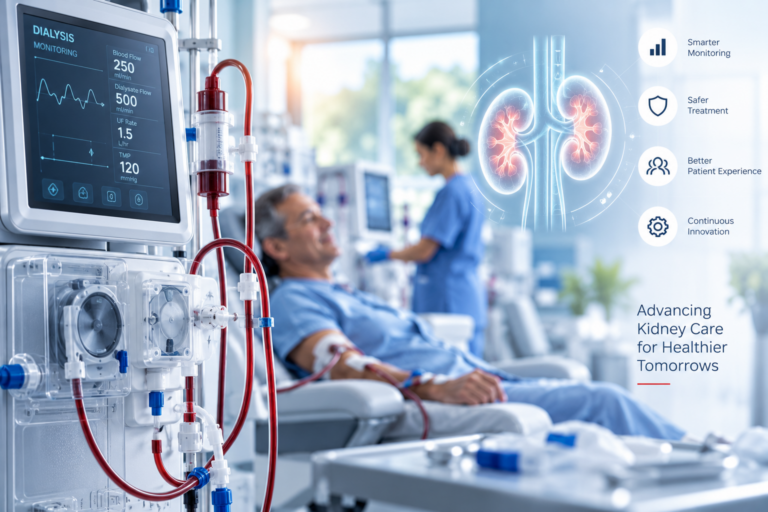
Healthcare is entering a new era—one where technology is not simply improving medical equipment, but changing how care is delivered, monitored and experienced.
From artificial intelligence and data-driven diagnostics to connected devices, remote monitoring and personalized treatment, innovation is helping healthcare move from a reactive model toward earlier detection, smarter decisions and more patient-centred care.
At Varni Corporation, we believe meaningful healthcare innovation begins with one question:
How can technology help people live healthier lives?
The next generation of healthcare is connected
Modern healthcare generates enormous amounts of information—from diagnostic imaging and clinical records to monitoring devices and laboratory data.
The challenge is no longer simply collecting information. It is turning information into useful, timely and responsible action.
Digital health technologies can help connect these pieces, supporting healthcare professionals with better information while making care more accessible to patients.
WHO similarly highlights interoperability, responsible data sharing and evidence-based digital solutions as important foundations for digital-health transformation.
4 innovations transforming healthcare
01 — AI & Data-Driven Diagnostics
Artificial intelligence can assist healthcare professionals by analysing complex datasets and identifying patterns that may otherwise be difficult to detect.
Its potential applications span medical imaging, clinical decision support, disease surveillance and health-system management.
But innovation must complement—not replace—clinical expertise. Human oversight, validation and responsible governance remain essential.
02 — Personalized Healthcare
Healthcare is becoming increasingly tailored to the individual.
Advances in data analytics, genomics and connected health technologies can help support more personalized approaches to prevention, diagnosis and treatment.
The long-term opportunity is simple:
better information → better-informed decisions → more personalized care.
03 — Connected & Preventive Care
Wearable devices, remote monitoring and digital platforms are creating new possibilities for monitoring health beyond the hospital.
Instead of waiting for a problem to become serious, connected technologies can support earlier awareness and ongoing management.
This represents an important shift:
from treating illness to supporting healthier lives.
04 — Healthcare That Reaches More People
Innovation only creates meaningful impact when people can access it.
Telehealth and digital health solutions can help extend healthcare services beyond traditional facilities, particularly where distance, infrastructure or workforce limitations create barriers.
WHO stresses that digital transformation should be inclusive and should not deepen inequalities between well-served and underserved populations.
Innovation needs responsibility
The future of healthcare cannot be built on technology alone.
Healthcare innovation must also address:
- Patient safety
- Data privacy
- Cybersecurity
- Clinical validation
- Ethical AI
- Interoperability
- Affordability
- Equitable access
WHO’s current work on AI for health specifically emphasizes governance, evidence, safety, equity and trust as technology develops faster than many existing regulatory frameworks.
That is why the most valuable healthcare innovations will not necessarily be the most futuristic.
They will be the ones that are safe, reliable, practical and genuinely useful to patients and healthcare professionals.
Varni Corporation’s Perspective
At Varni Corporation, we see healthcare innovation as a combination of engineering excellence, quality, clinical needs and human impact.
Our focus on medical-device solutions across areas such as infusion therapy, nephrology, surgical, cardiovascular and critical care reflects an important principle:
Innovation matters most when it improves real healthcare outcomes.
The future of healthcare will not belong to technology alone.
It will belong to the collaboration between people, science, engineering and responsible innovation.